Austrian VAT Registrations and Returns
In Austria, VAT numbers always begin with the 'ATU' prefix followed by eight digits. Austria applies a well-established VAT system for international businesses — everything you need to stay compliant.
Austria VAT news
Austria VAT reference
Austria VAT rates 2026
| Standard rate | 20.0% |
| Reduced rates | 19.0%, 13.0%, 10.0% |
| Super-reduced rate | 4.9% |
Rates pulled from the European Commission's Taxes in Europe Database (TEDB). Last verified 10 October 2026.
Which goods qualify for reduced VAT in Austria?
| Category | Rate | Legal basis |
|---|---|---|
| Essential food items | 10.0% | Annex III §1 |
| Books (print) | 10.0% | Annex III §6 of Directive 2006/112/EC |
| E-books | 10.0% | Annex III §6 (electronic publications, post-2018) |
| Newspapers | 10.0% | Annex III §6 |
| Prescription medicines | 10.0% | Annex III §3 |
| Passenger transport | 10.0% | Annex III §5 |
| Hotel accommodation | 10.0% | Annex III §12 |
| Restaurant meals | 10.0% | Annex III §12a |
| Non-alcoholic drinks | 10.0% | Annex III §1 |
| Cinema admission | 10.0% | Annex III §7 |
When must I register for VAT in Austria?
VAT filing in Austria
- Default frequency Monthly by default. Quarterly available if annual turnover < €100,000.
- Monthly deadline 15th day of the 2nd month following the period
- Quarterly deadline 15th day of the 2nd month following the quarter (turnover < €100,000)
- EC Sales List Monthly when intra-EU supplies exceed €0
- Annual return Required — 30 June following the calendar year
Austria digital reporting roadmap
-
B2G mandatory e-invoicing in force since 2014-01-01All federal-level public-sector invoices must be sent electronically (via PEPPOL or USP).
OSS in Austria
Do I need one?
Reference data compiled by VAT Support — informational only, not tax advice. Always confirm with the Bundesministerium für Finanzen (BMF) before relying on these details.

Is VAT registration required in Austria?
Whether you need VAT registration in Austria depends on your business's location, the nature of your goods or services, and whether you sell to Austrian consumers or businesses.
What non-established sellers actually need to know
Per the Bundesministerium für Finanzen (BMF), Austria's domestic small-business threshold does not shield foreign sellers — registration is required before your first taxable transaction, and the process runs through a single centralised office.
No threshold for non-established sellers
Austria's domestic €55,000 small-business threshold does not apply to non-established foreign businesses. You must register for VAT before your first taxable transaction in Austria, regardless of turnover.
Centralised filing office
Non-resident businesses don't apply to their local tax office — they apply to one centralised office, Finanzamt Österreich, Dienststelle Graz-Stadt, by post, submitting Form Verf 19 with incorporation documents, articles of association and proof of business activity (often requiring certified German translations).
Non-EU businesses need a fiscal representative
A fiscal representative is required for all non-EU companies — with two exceptions: businesses established in the UK and Norway are exempt from this requirement.
Registration takes 7–8 weeks
Unlike most EU countries, where registration takes 3–7 days, Austria's centralised postal process typically takes 50–60 days (about 7–8 weeks). Plan your Austrian launch timeline accordingly.
Source: Bundesministerium für Finanzen (BMF) / Finanzamt Österreich, guidance on VAT registration for non-established businesses (Form Verf 19).
My B2C business is based outside the EU
For businesses based outside the EU, VAT obligations in Austria depend on where your inventory is held and whether your customers are Austrian consumers or VAT-registered businesses.

Selling goods on your website
Running your own online store brings additional VAT responsibilities. If you hold stock in Austria, you must register for VAT there. When selling goods stored in another country to customers in Austria, you have two pathways to compliance.
Book a call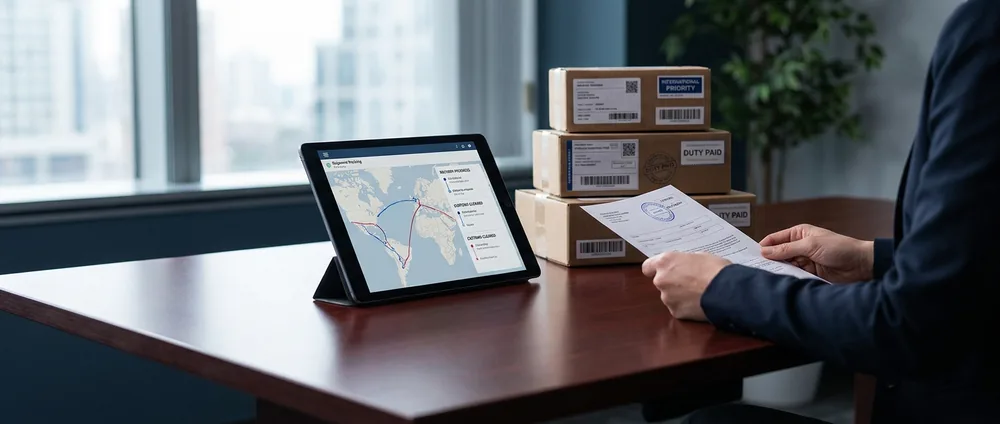
Importing goods to Austria
If products are shipped from outside the EU at time of purchase, you have three compliant methods:
Get registered for IOSS, fast
Ready to start selling to Austria customers? Begin your IOSS registration today, and we can secure your IOSS number in as little as three working days.

Selling goods on a marketplace
Since 2021, platforms like Amazon and eBay collect and remit VAT on qualifying B2C sales in Austria. Marketplaces handle VAT when:
Don't let VAT get in the way of marketplace growth
Expand your marketplace presence in Austria while staying fully VAT compliant. We simplify compliance so you can focus on selling.
Selling digital services and digital goods to Austria
In Austria, digital services — eBooks, online courses, streaming, and downloadable software — are subject to Austrian VAT. Non-EU sellers can register in Austria or use the OSS scheme to cover all EU digital service sales.
To sell digital services to Austria customers, you can choose one of two registration routes depending on how your service is delivered.

My B2C business is based in the EU
Assuming you are not established in Austria, EU-based sellers can trade up to EUR 10,000 per year to other EU markets before VAT registration is required.

Stock in Austria
Holding inventory in Austria creates a VAT obligation. You must either register there or use the One Stop Shop (OSS) scheme in your home country.
Stock elsewhere in EU
Each EU country where you store goods or have customers may trigger a separate VAT requirement. Either register locally or consolidate via OSS.
Stock outside the EU
For goods delivered from outside the EU, choose among: VAT registration in Austria, IOSS registration, or Delivered at Place (DAP). For services, register for OSS with your home tax authority.
Feeling confused? Take the EU VAT quiz
There are many variables. In under a minute, discover whether you need IOSS, OSS, Non-Union OSS, or a standard VAT registration.
Take the quiz →
VAT on sales to Austrian businesses
When selling B2B in Austria, your VAT-registered Austrian customer handles VAT via reverse charge. Registration is still required if you hold stock in Austria or use an Austrian fulfilment centre.
Based outside the EU, selling B2B
If your Austria customer is VAT-registered, you generally invoice with the “reverse charge mechanism,” and they declare VAT locally.
Based in the EU, selling B2B
In many cases, intra-EU B2B supplies are zero-rated when both parties are VAT-registered. You still must follow Austria invoicing and reporting requirements.
2026 Austria VAT Rates by Product Category
Official VAT rates in Austria verified against European Commission TEDB records. Select a specific product or service category for reverse charge rules, OSS thresholds, and statutory citations:
欧洲及英国增值税专家一对一沟通