Understanding VAT refunds in Europe
Value Added Tax (VAT) is charged at multiple stages of a product's lifecycle across Europe. Whether you recover VAT through your return, the EU refund scheme, or a 13th Directive reclaim depends on where you are established and where you are registered.
How VAT refunds fit together
VAT is a consumption tax applied throughout Europe and the EU, from production through to sale. When you buy in Europe, VAT is usually included in the price you pay.
Output VAT
Output VAT is the tax you collect from customers and pay to the tax authority. For example, if you are VAT-registered in Italy and sell cosmetics for EUR 200 to an Italian customer, you add 22% VAT. The customer pays EUR 244; you remit EUR 44 to the Italian authorities.
Input VAT
Input VAT is the VAT your business pays on purchases or imports within the EU. If you buy packaging from an Italian supplier for EUR 610 including EUR 110 VAT, that VAT is your input VAT.
Refunds normally apply to Input VAT (unless Output VAT was overpaid). There are three main routes: via your VAT return, the EU VAT refund scheme (8th Directive), or a 13th Directive reclaim. Which route applies depends on your establishment, registration, and where the VAT arose.
Usually you must be VAT registered to recover through a return—which is why returns are the most common path. If you are not registered where you incurred the VAT, the EU directive routes may be available: EU businesses often use the EU VAT refund scheme; non-EU entities may use the 13th Directive.
13th Directive VAT refunds
If you are not established in the EU and not VAT-registered in the member state where VAT was charged, you may still reclaim VAT on qualifying business expenses. This process is known as a 13th Directive refund.
You will typically need to show that you:
- Do not have a business establishment in the country where VAT was paid
- Are not VAT-registered in that country
- Paid VAT on business purchases or expenses
- Incurred VAT on categories that country allows to be refunded
Some countries require a fiscal representative based locally to file the reclaim. Representatives are legally responsible for meeting local formalities.
Each country sets its own deadlines, claim frequency limits, and minimum amounts. In general, the filing deadline is often 30 June or 30 September in the year after the costs were incurred (for example, VAT on a July 2024 purchase claimed by 30 June or 30 September 2025, depending on the member state).
Minimum claim sizes often depend on the period length: commonly around EUR 400 for periods under a year and about EUR 50 for annual-style claims. Exact rules vary—if you plan a 13th Directive reclaim, a Vat.Support consultant can confirm the details for your case.
EU VAT refund scheme (8th Directive)
EU-established businesses can recover VAT from other member states without registering for VAT there, using the 8th Directive electronic refund procedure.
You may use this route if, broadly:
- You are VAT-registered in your home member state but not in the country where you incurred the input VAT
- You do not have taxable activities requiring registration in that country
- You do not have a fixed establishment there in respect of those costs
The usual application deadline is 30 September of the year following the refund year (Cyprus is a common exception at 30 June). For example, input VAT on a June 2024 purchase is often claimable by 30 September 2025, subject to local rules.
You can usually combine claim frequencies (for example annual, semi-annual, or quarterly) up to the limits each country sets. Minimum amounts are often in the region of EUR 400 for shorter periods and EUR 50 for an annual claim—always confirm per member state.
Claiming a refund through your VAT return
Your VAT return compares input VAT (on purchases) with output VAT (on sales). If input VAT exceeds output VAT, you may be entitled to a refund of the balance. If output VAT is higher, you pay the net amount to the tax office.
In practice, authorities often carry forward credits instead of paying cash refunds, and procedural requirements can be demanding. For example, securing refunds in some countries may require a local bank account—which can mean travel, notarisation, and professional assistance. (Clients have seen bank-setup costs in the order of EUR 3,000 in difficult cases—Poland is often cited as an example of a jurisdiction with strict practical requirements.)
Despite complexity, refunds are achievable with the right process. Understanding each country's policy also helps you choose suppliers and structure purchases—for instance, buying where you are already registered when you plan a large capital spend.

A straightforward three-step path
We help you choose the correct route (return, 8th Directive, or 13th Directive), assemble evidence, and deal with tax authorities in the right language and format.
Eligibility and route
We map your establishment, registrations, and invoices to the correct reclaim mechanism. EU businesses, non-EU businesses, and locally registered traders follow different rules—getting this step right avoids rejected claims and lost time.
Documentation and filing
We prepare the application pack, translations where needed, and submissions to the relevant authority. Our multilingual team coordinates follow-ups so you are not navigating foreign portals alone.
Refund and compliance follow-through
Once the authority accepts the evidence, the refund is paid according to local timelines. We help you document outcomes and stay aligned with ongoing compliance where registrations are involved.
Simplifying EU VAT compliance with Vat.Support
Whether you need a 13th Directive reclaim, an 8th Directive application, or help optimising VAT returns, we provide practical, country-aware support.
VAT refund FAQs
What is the difference between the 8th and 13th Directives?
The 8th Directive route is for EU-established businesses reclaiming VAT from other member states without local VAT registration. The 13th Directive route is primarily for non-EU businesses that are not registered where the VAT arose.
When is the 13th Directive deadline?
It depends on the refunding country, but it is often 30 June or 30 September in the year after the expense. Always confirm locally—Cyprus and a few other rules differ for 8th Directive-style timelines.
Can I recover VAT through my VAT return?
If you are registered in the country concerned, excess input VAT is normally handled on the periodic VAT return. Cash refunds are not guaranteed—many offices prefer to carry balances forward.
Do minimum claim amounts apply?
Yes. Member states set thresholds that often look like roughly EUR 400 for shorter claim periods and about EUR 50 for annual claims under directive-style reclaims—verify the current figure for each country.
Not sure which refund route applies? Take the quiz or speak to the Vat.Support team.
About Vat.Support
We are more than a standard VAT provider: we work closely with clients across languages and time zones. Our focus is helping ecommerce and cross-border businesses reach global markets with clearer, calmer compliance. Read our story.
Our services

VAT rate consultancy
Product VAT rates vary by category and country—even subtle product features can change the rate. We help you charge the right VAT wherever you sell.

VAT recovery services
We manage 13th Directive and related reclaim documentation so you are not navigating foreign portals and languages alone.
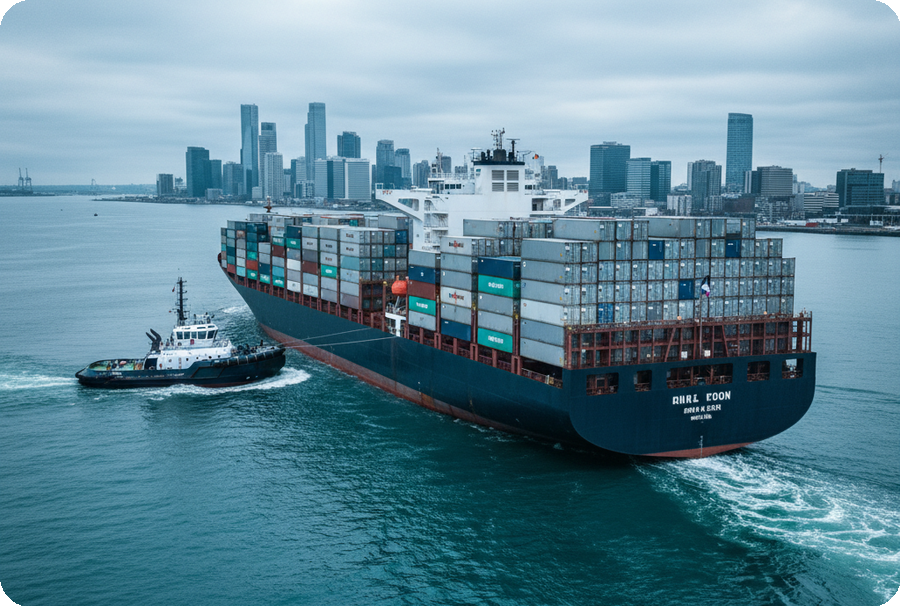
One Stop Shop solutions
IOSS, Union OSS, Non-Union OSS—we help you register and operate the scheme that matches how and where you sell.

Amazon FBA support
Moving stock into Amazon warehouses triggers VAT obligations in multiple countries—we align registrations and filings with your fulfilment footprint.
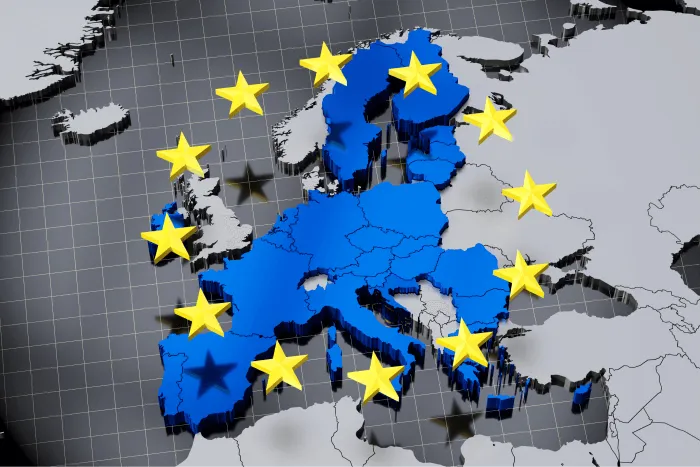
VAT registration services
We support registrations across a broad European footprint—including markets such as Austria, Belgium, the Czech Republic, Denmark, Finland, France, Germany, Italy, the Netherlands, Norway, Poland, Spain, Sweden, and the UK, plus selected non-EU jurisdictions where we operate.

Integrations and API
Connect your store to our compliance workflow: sales data flows in, and you review and approve returns prepared by our team.
欧洲及英国增值税专家一对一沟通